ux design / client project

Designing for Trust: Web Redesign

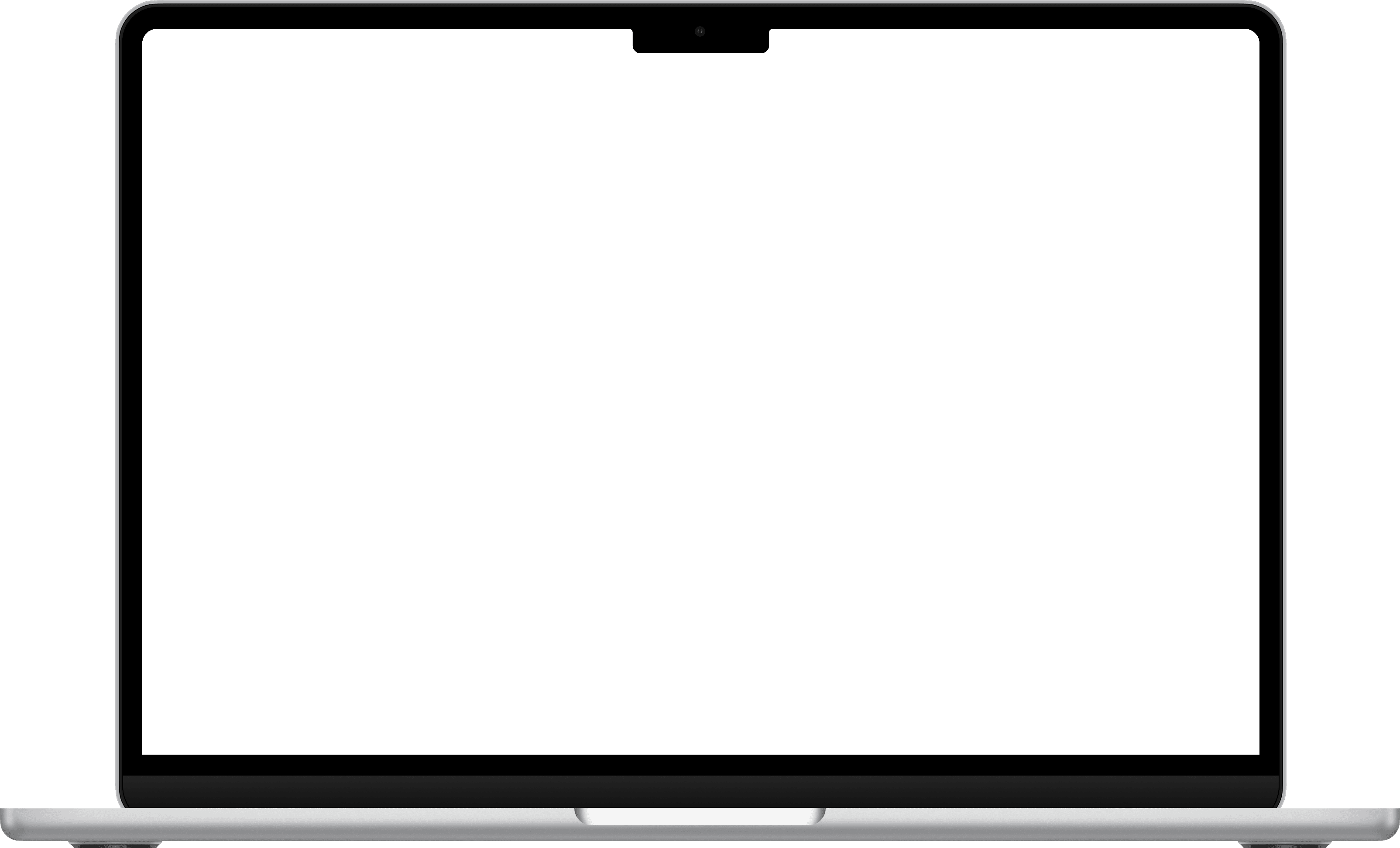
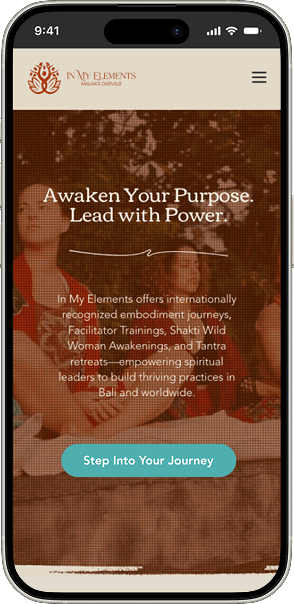
Responsive Web Design

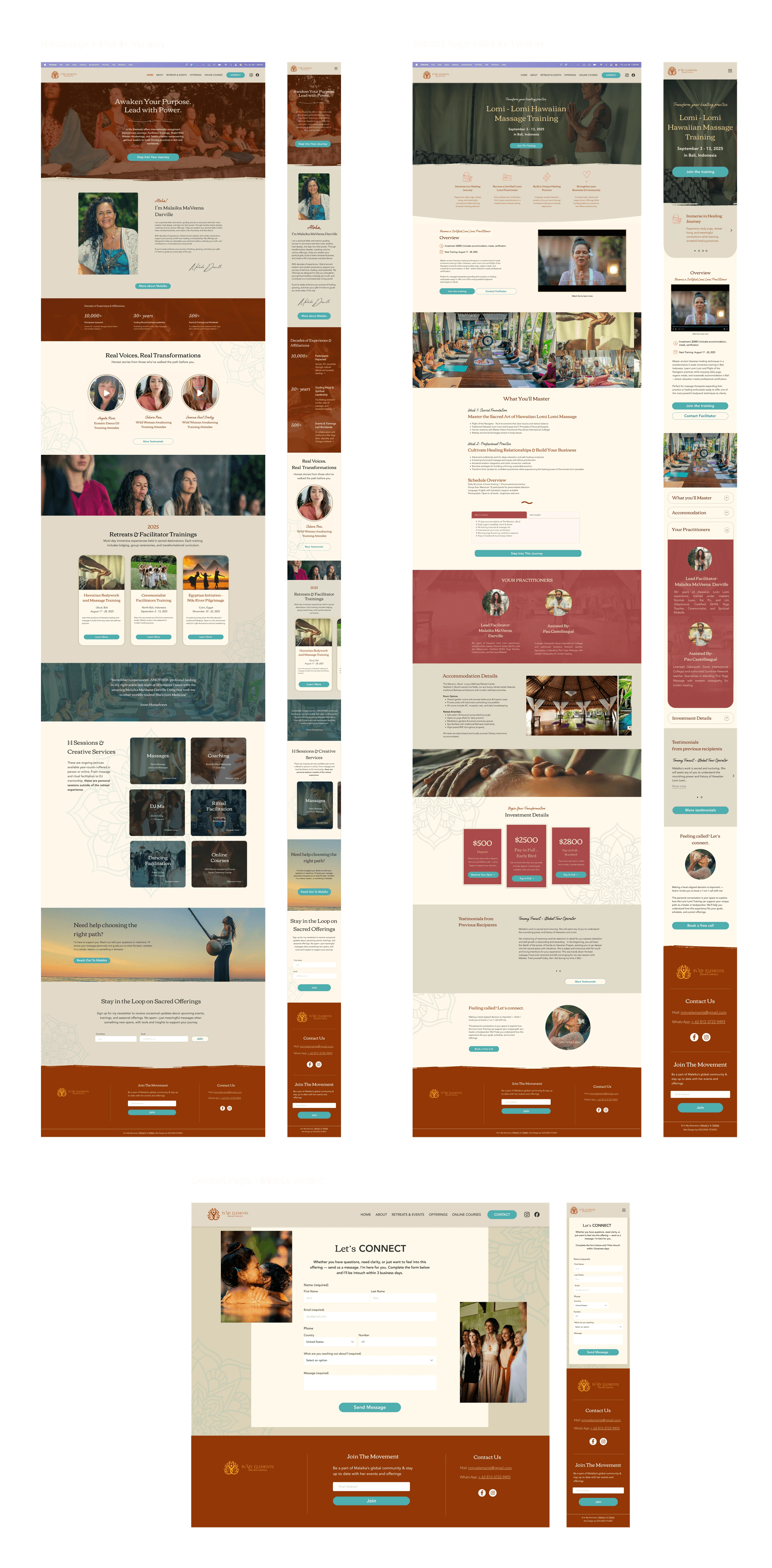
Strategic Redesign of In My Element's website to convey storytelling, increase trust for their current offerings. Designing for Trust: Wellness Retreat Conversion Through Intentional User Experience

Strategic Redesign of In My Element's website to convey storytelling, increase trust for their current offerings. Designing for Trust: Wellness Retreat Conversion Through Intentional User Experience

Strategic Redesign of In My Element's website to convey storytelling, increase trust for their current offerings. Designing for Trust: Wellness Retreat Conversion Through Intentional User Experience

role

Sole UX Designer/UX Writer working with external marketing team

PRODUCT

Responsive Website + Mobile designs

tools

Figma, FigJam, Lyssna, Google Suite, Wix

when

March-April (4 weeks)

Table of contents
Table of contents

View Project

View Project

View Project

View Project

View Project

View Project

View Project

View Project

View Project

View Project

View Project

View Project

background
background

From Scam to Trust: Why Qualified Wellness Seekers Were Abandoning the Booking Journey

My client runs transformative retreat style trainings around the world, allowing people the opportuntity to experience wellness luxury in addition to learning a new skill, but their website did not reflect the great care and investment the in person trainings truly had.

Potential retreat participants struggled to move from interest to booking due to a website experience that created barriers rather than builds confidence.

My client runs transformative retreat style trainings around the world, allowing people the opportuntity to experience wellness luxury in addition to learning a new skill, but their website did not reflect the great care and investment the in person trainings truly had.

Potential retreat participants struggled to move from interest to booking due to a website experience that created barriers rather than builds confidence.

I interviewed 6 health-conscious women (ages 20-30s) across different lifestylesβ€”college students, nurses, and full-time momsβ€”all experienced period app users who've since abandoned or inconsistently use these tools. Women do not live a one-size-fits all life, so it was important for me to have variety in my users.


Research Goals:
- To understand why women abandon period tracking apps
- Identify what makes them feel genuinely supported in managing their health

- Define what "wellness" means to them in the context of hormonal health

Problem

Users encountered poor usability, unclear content, and visual misalignment that failed to reflect the transformational nature of the wellness retreats.

the challenge

How might we design a trustworthy and inspiring digital journey that empowers wellness seekers to confidently evaluate and commit to transformational retreat experiences?

success metrics preview

I will be focusing on gathering the attitudes based on their experience.

  • Trust- Evaluating attitudes on whether the website felt credible & professional

  • Inspiration - Whether users were inspired to take action after viewing website

  • Usability - If users were able to complete tasks on the website


β€” How might we design a trustworthy digital journey that empowers users to confidently commit to transformational retreat experiences?

β€” How might we transform stress management from reactive damage control to effortless, proactive prevention?

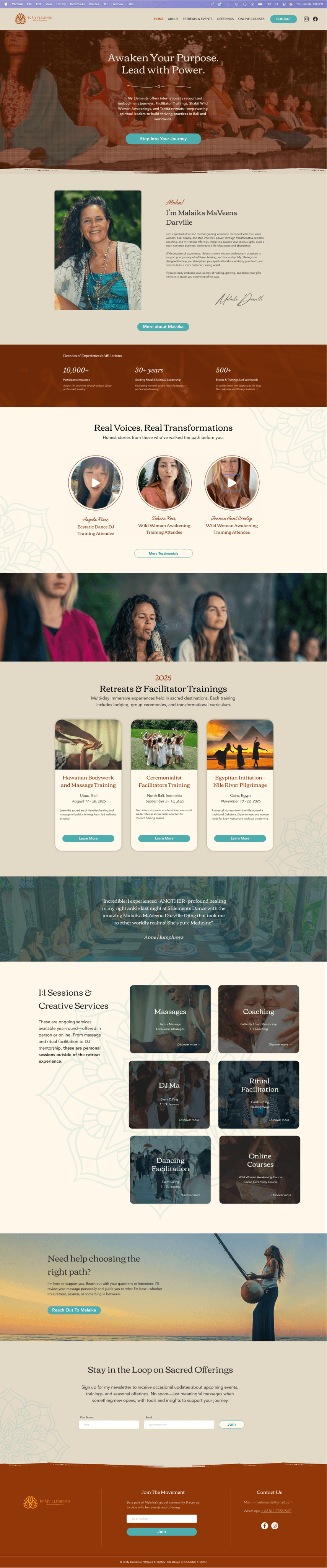
before & after preview

landing page

Before


Cognitive overload
β†’ Long scrolling pages with dense information sections

Poor usability β†’ Excessive text and unclear navigation paths

Brand disconnect β†’ Visual design didn't reflect the transformational wellness experience

After


User-centered journey
β†’ Each section strategically crafted for decision-making flow


Improved usability β†’ Streamlined content with clear wayfinding and reduced cognitive load


Brand alignment β†’ Visual design authentically represents wellness transformation values

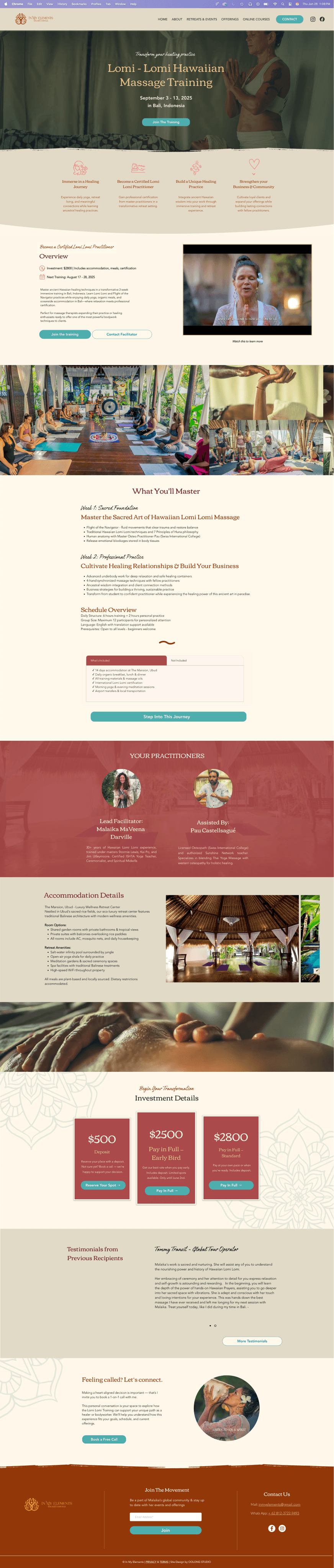
retreat discovery page

Before

Cognitive burden β†’ Dense text blocks overwhelming users with too much information at once


Poor conversion flow
β†’ No clear user journey or strategic content hierarchy

After

Focused messaging β†’ Each section strategically crafted to guide decision-making

Clear value proposition β†’ Streamlined content highlighting key benefits and next steps

contact page

Before

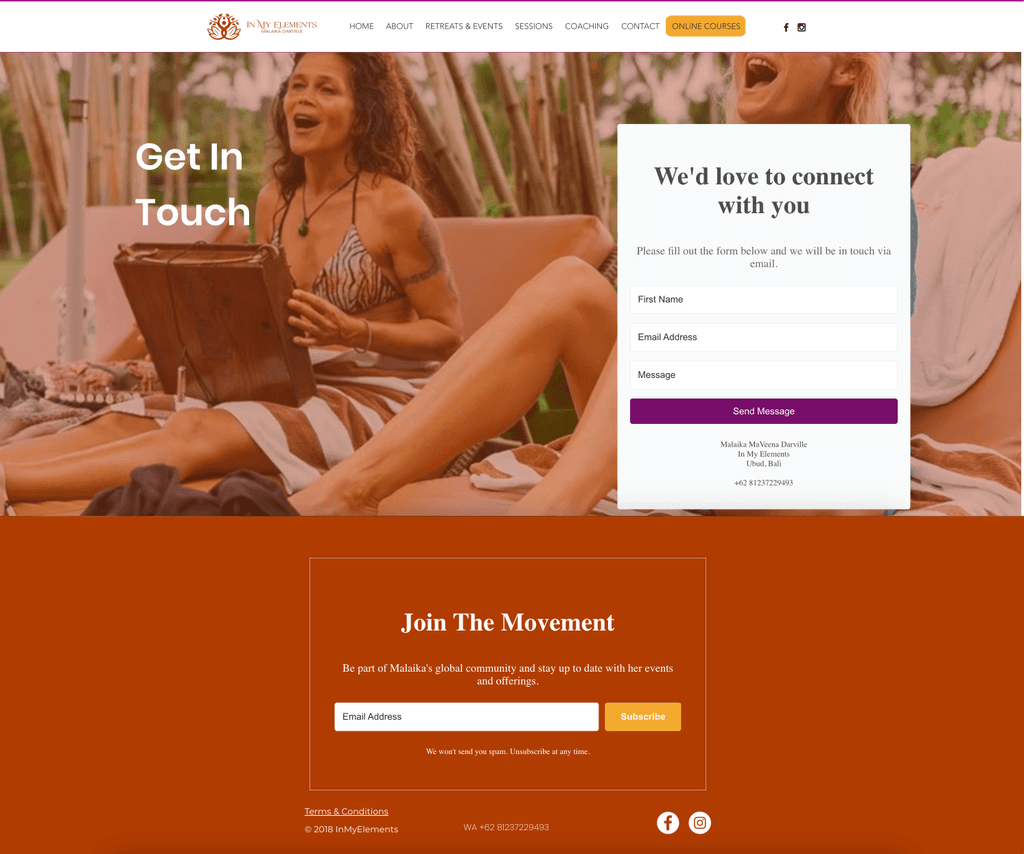
Barrier to connection β†’ Generic contact form with no context or trust-building elements

Missed opportunity β†’ No visual storytelling or brand reinforcement

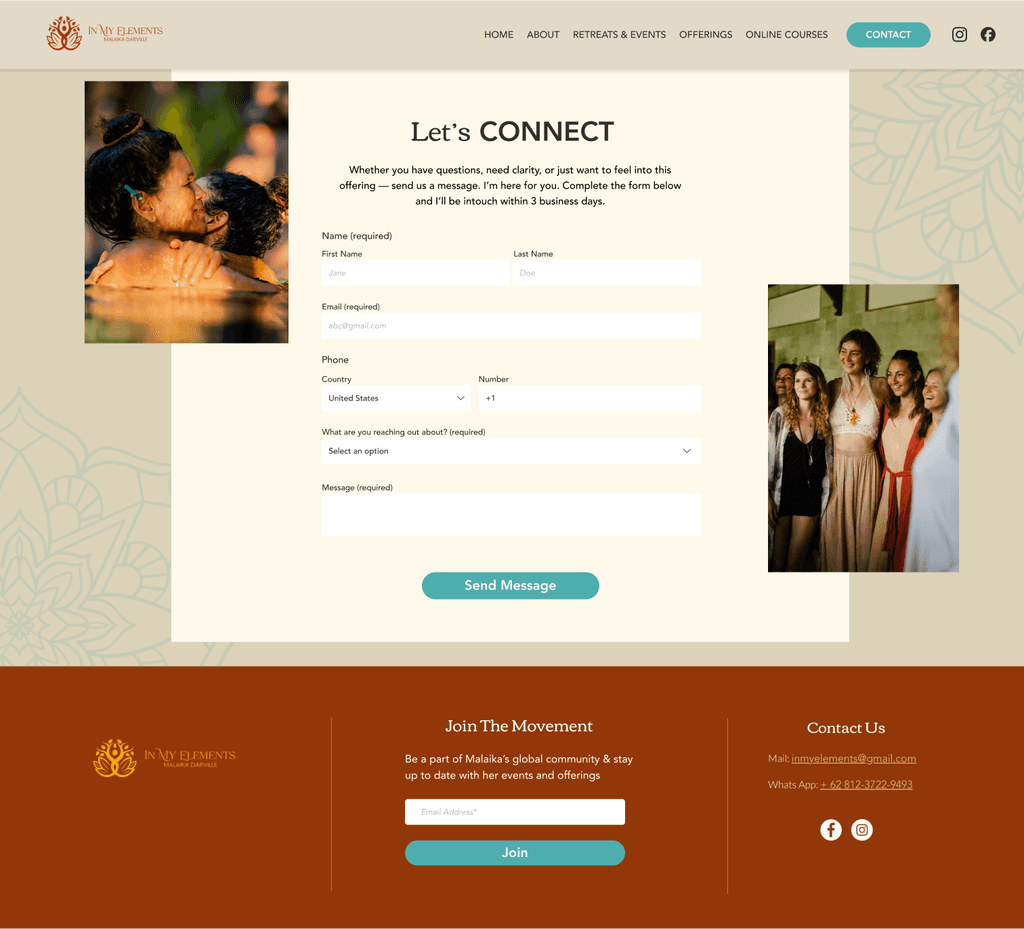
After

Reduced friction β†’ Clear purpose and benefit for reaching out

Brand alignment
β†’ Cohesive design language that reinforces wellness transformation values

research:
user interviews

Uncovering the Hidden Decision-Making Patterns of Wellness Retreat Seekers

I conducted user interviews with 5 participants who had experience browsing wellness retreats and events online. My goal was to understand their decision-making processβ€”what made them say "yes" or "no" to online wellness offerings.


Research Goals:

  • What Builds Trust

  • what made them say "yes" or "no" to online wellness offerings (user needs)

  • pain points

I interviewed 6 health-conscious women (ages 20-30s) across different lifestylesβ€”college students, nurses, and full-time momsβ€”all experienced period app users who've since abandoned or inconsistently use these tools. Women do not live a one-size-fits all life, so it was important for me to have variety in my users.


Research Goals:
- To understand why women abandon period tracking apps
- Identify what makes them feel genuinely supported in managing their health

- Define what "wellness" means to them in the context of hormonal health

the breakthrough
the breakthrough

Key Insights:

  • Trust Builders: Personal facilitator presence, transparent pricing, authentic testimonials

  • Pain Points: Information overload, aggressive sales copy, unclear value proposition

  • User Needs: Transparent journey, emotional connection, clear logistics

Primary Pain Points:

  • Lack of clarity about value and what's logistically included

  • Feeling pressured by aggressive sales language

  • Information overload causing decision fatigue

  • No option for human interaction when needed

User Needs:

  • Transparent journey through the offerings

  • Emotional connection through authentic visuals and community energy

  • Clear logistics alongside inspiring content

  • Accessible facilitator presence

ideate:
strategic
design approach
ideate:
strategic
design approach

Crafting an intentional user journey through Establishing Design Values:

Based on user research insights, I developed a dual-pathway experience that builds trust first, then ignites inspirationβ€”recognizing that wellness retreat booking requires both rational confidence and emotional excitement

I interviewed 6 health-conscious women (ages 20-30s) across different lifestylesβ€”college students, nurses, and full-time momsβ€”all experienced period app users who've since abandoned or inconsistently use these tools. Women do not live a one-size-fits all life, so it was important for me to have variety in my users.


Research Goals:
- To understand why women abandon period tracking apps
- Identify what makes them feel genuinely supported in managing their health

- Define what "wellness" means to them in the context of hormonal health

Be Authentic

Show real stories and honest information to build credibility

Create Curiosity

Make users excited while providing necessary details

Guide the Journey

Support users from first visit to booking

Make it Accessible

Everyone can easily explore and understand offerings

Content Strategy - "Keep it skimmable with context right after - along with CTA"

This became my north star, ensuring users could quickly scan key information while having deeper context available when needed.

I interviewed 6 health-conscious women (ages 20-30s) across different lifestylesβ€”college students, nurses, and full-time momsβ€”all experienced period app users who've since abandoned or inconsistently use these tools. Women do not live a one-size-fits all life, so it was important for me to have variety in my users.


Research Goals:
- To understand why women abandon period tracking apps
- Identify what makes them feel genuinely supported in managing their health

- Define what "wellness" means to them in the context of hormonal health

ideate:
site architecture
ideate:
site architecture

Site map

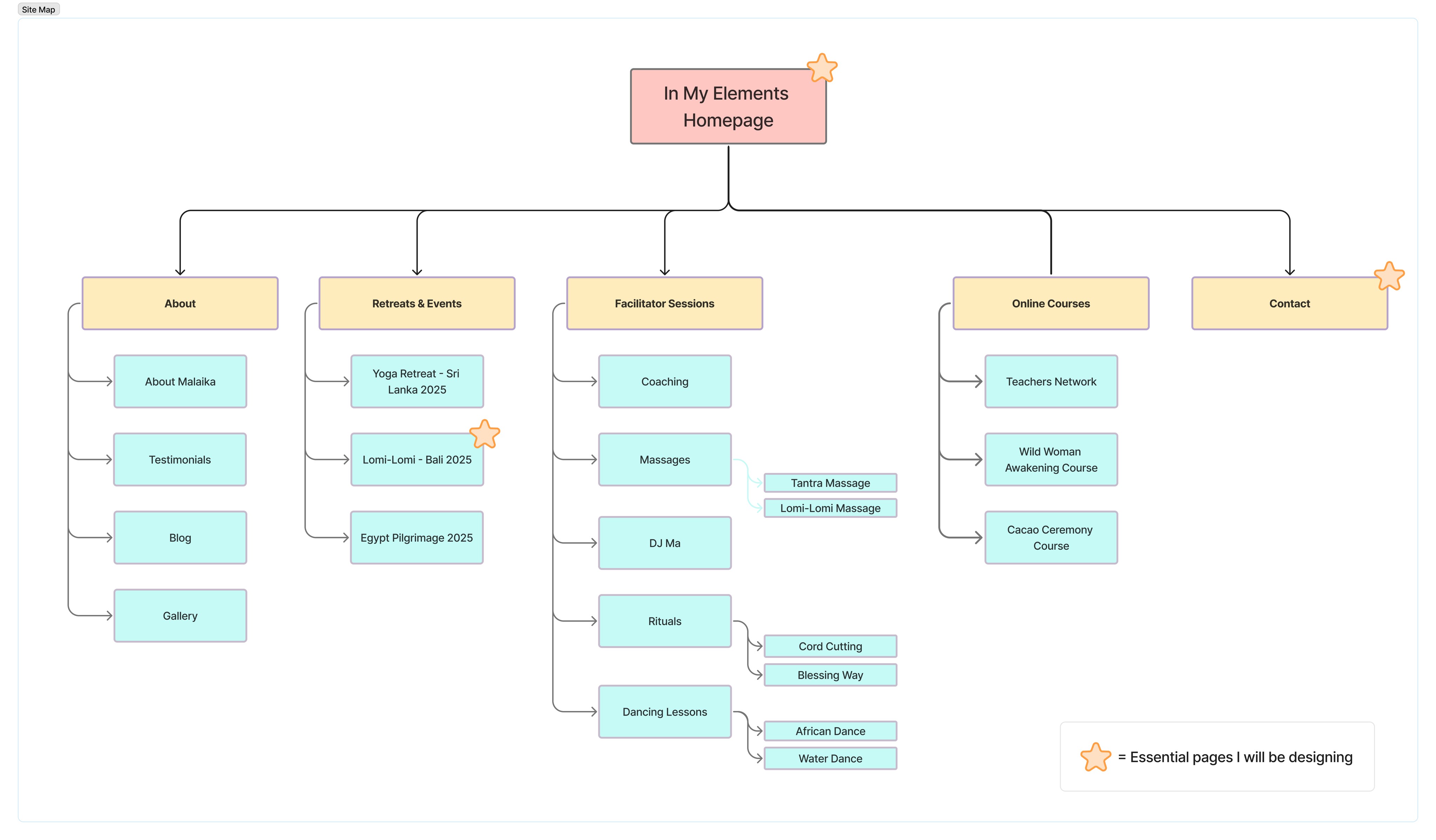
The client had many offerings, often becoming jumbled and confused for new users who weren't familair with her offerings. The confusion of the navigation reflected in low conversions, users didn't know what to prioritize.

The client and marketing team wanted to keep the site navigation in the original architecture, but I communicated the need for better navigation to create clarity in each offerings.

I interviewed 6 health-conscious women (ages 20-30s) across different lifestylesβ€”college students, nurses, and full-time momsβ€”all experienced period app users who've since abandoned or inconsistently use these tools. Women do not live a one-size-fits all life, so it was important for me to have variety in my users.


Research Goals:
- To understand why women abandon period tracking apps
- Identify what makes them feel genuinely supported in managing their health

- Define what "wellness" means to them in the context of hormonal health

ideate:
Constraints
ideate:
Constraints

Turning Constraints into Creative Solutions

Technical Limitations

Working within Wix's constraints meant keeping interactions simple and focusing on clean, buildable UI elements. The marketing team's limited technical knowledge required designs that could be easily implemented without complex custom code.

Stakeholder Collaboration

Challenge: Balancing marketing goals (selling) with user needs (learning and feeling confident).

The marketing team initially pushed for:

  • Sales-heavy copy that users found "pushy"

  • Bright, overly creative visuals that could overwhelm casual browsers

My Advocacy*

I used user interview insights to demonstrate that aggressive sales language was a key barrier to trust. I proposed using authentic photos and videos to satisfy the creative vision while maintaining the clean, approachable design users needed.

I interviewed 6 health-conscious women (ages 20-30s) across different lifestylesβ€”college students, nurses, and full-time momsβ€”all experienced period app users who've since abandoned or inconsistently use these tools. Women do not live a one-size-fits all life, so it was important for me to have variety in my users.


Research Goals:
- To understand why women abandon period tracking apps
- Identify what makes them feel genuinely supported in managing their health

- Define what "wellness" means to them in the context of hormonal health

ideate:
user flows
ideate:
user flows

Useful user flow, beneficial for me and the marketing team
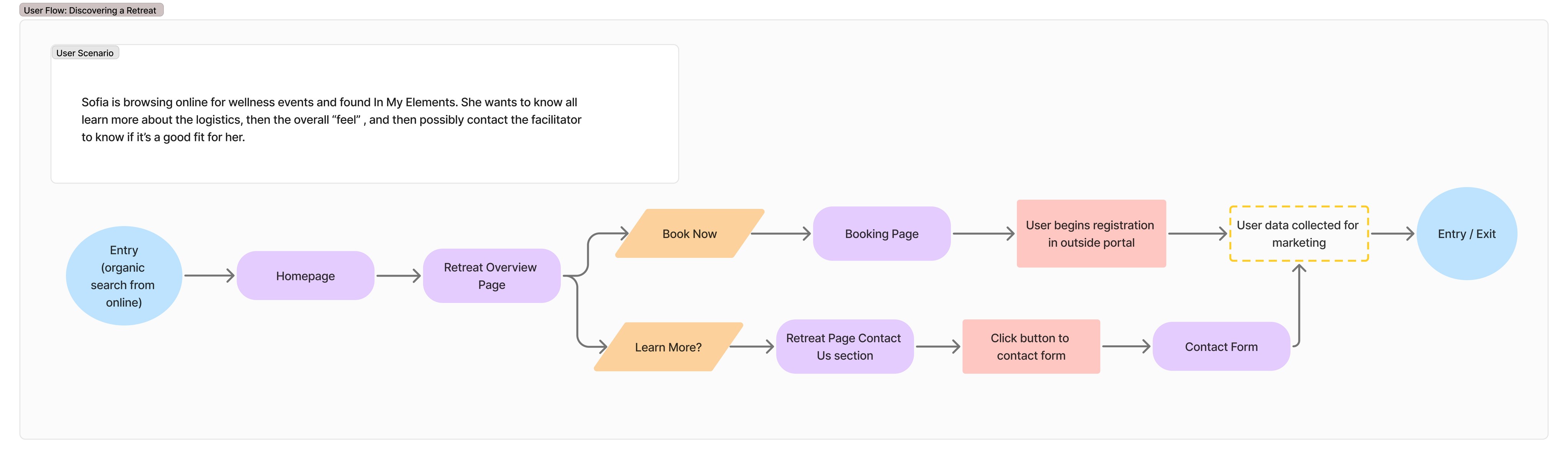
The purpose of the user flow has both the business needs and user journey in mind, where the user is exploring the page and is expected to take an action (whether its signing up for the retreat or adding their information) and the business need of collecting user data for leads and conversions.

I interviewed 6 health-conscious women (ages 20-30s) across different lifestylesβ€”college students, nurses, and full-time momsβ€”all experienced period app users who've since abandoned or inconsistently use these tools. Women do not live a one-size-fits all life, so it was important for me to have variety in my users.


Research Goals:
- To understand why women abandon period tracking apps
- Identify what makes them feel genuinely supported in managing their health

- Define what "wellness" means to them in the context of hormonal health

ideate:
card sort
ideate:
card sort

Method: Card Sorting with Retreat Veterans

Method: Card Sorting with Retreat Veterans

Two experienced retreat participants ranked website sections by browsing importance to validate information hierarchy and user priorities.

Key Finding: Gender-based decision-making patterns emerged:

  • Female participant: Prioritized emotional resonance (testimonials, facilitator connection, community impact)

  • Male participant: Prioritized logistics (dates, pricing, what's included, FAQs)

Strategic Implication: Rather than forcing a single hierarchy, the website must accommodate both decision-making styles simultaneously.

I interviewed 6 health-conscious women (ages 20-30s) across different lifestylesβ€”college students, nurses, and full-time momsβ€”all experienced period app users who've since abandoned or inconsistently use these tools. Women do not live a one-size-fits all life, so it was important for me to have variety in my users.


Research Goals:
- To understand why women abandon period tracking apps
- Identify what makes them feel genuinely supported in managing their health

- Define what "wellness" means to them in the context of hormonal health

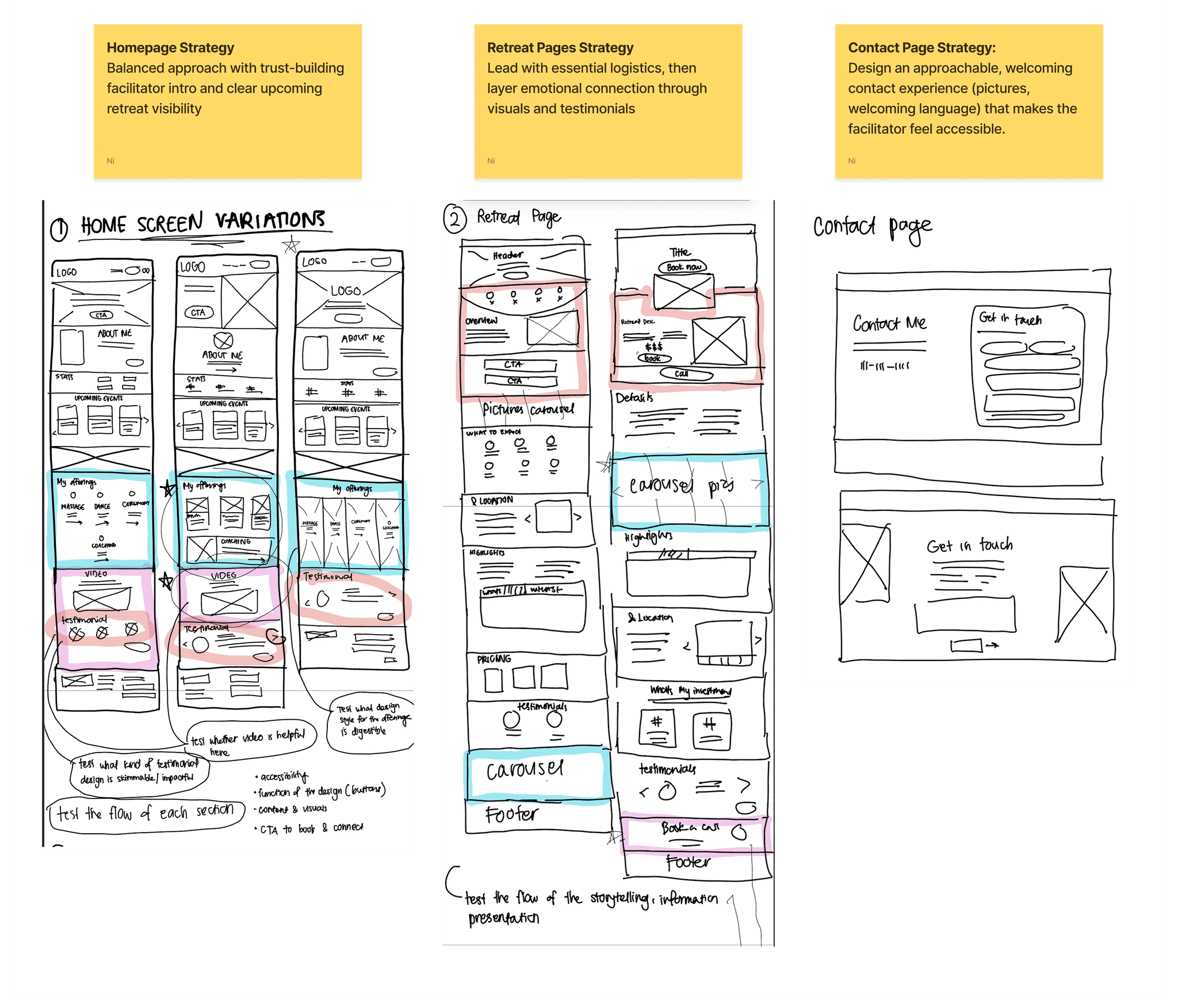
low fidelity wireframes:
content concepts to design
test #1:
usability feedback

Measuring What Matters: How Strategic Design and Content Strategy Tripled User Trust

I created a mid-to-high fidelity prototype for moderated testing with 5 participants who were actively interested in wellness offerings. Participants completed identical tasks on both the original and redesigned versions.

Testing Goals:

  • Measure clarity, trust, and user motivation

  • Validate information hierarchy effectiveness

  • Assess conversion path visibility


I created a mid-to-high fidelity prototype for moderated testing with 5 participants who were actively interested in wellness offerings. Participants completed identical tasks on both the original and redesigned versions.

Testing Goals:

  • Measure clarity, trust, and user motivation

  • Validate information hierarchy effectiveness

  • Assess conversion path visibility


I created a mid-to-high fidelity prototype for moderated testing with 5 participants who were actively interested in wellness offerings. Participants completed identical tasks on both the original and redesigned versions.

Testing Goals:

  • Measure clarity, trust, and user motivation

  • Validate information hierarchy effectiveness

  • Assess conversion path visibility


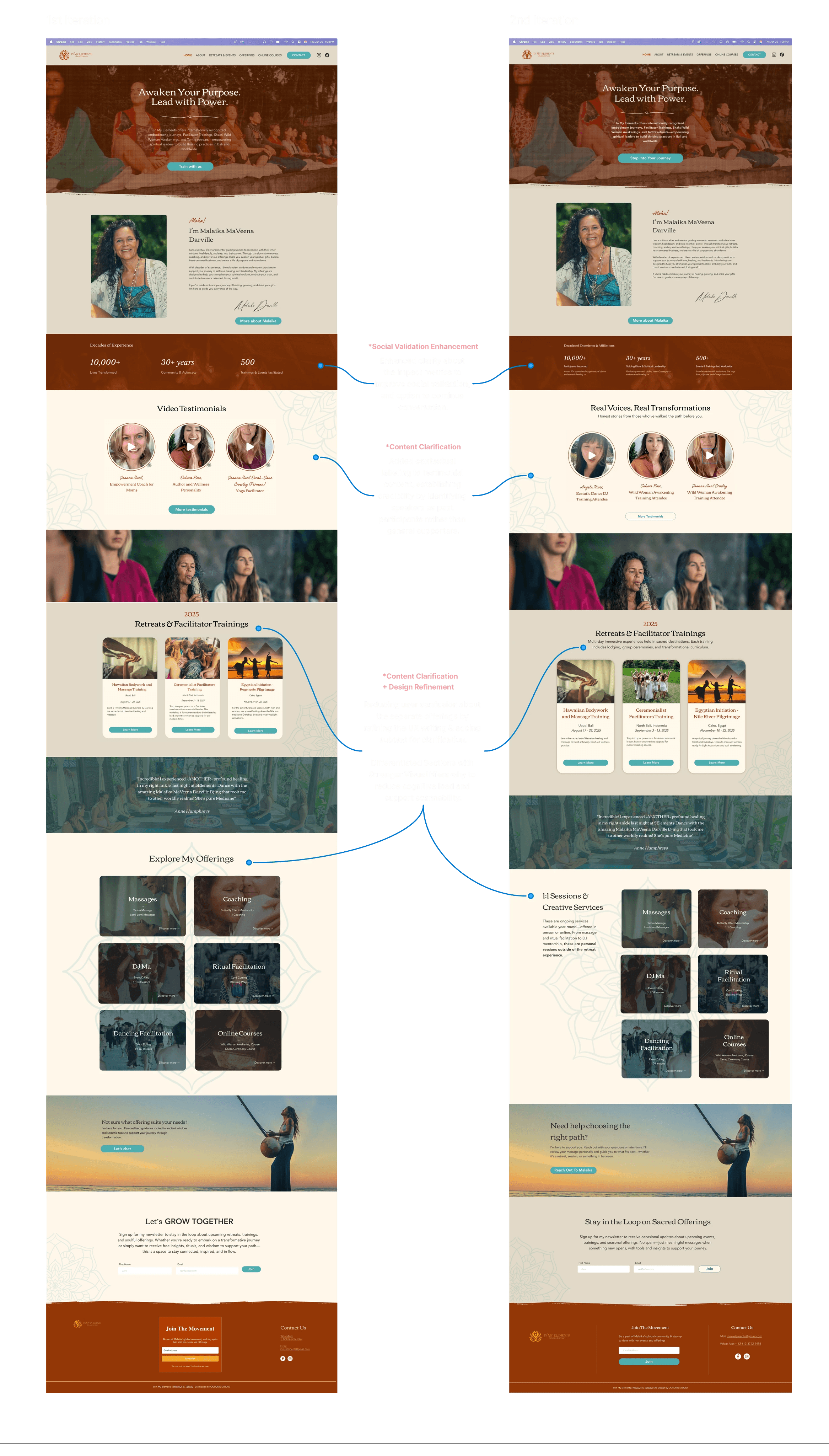
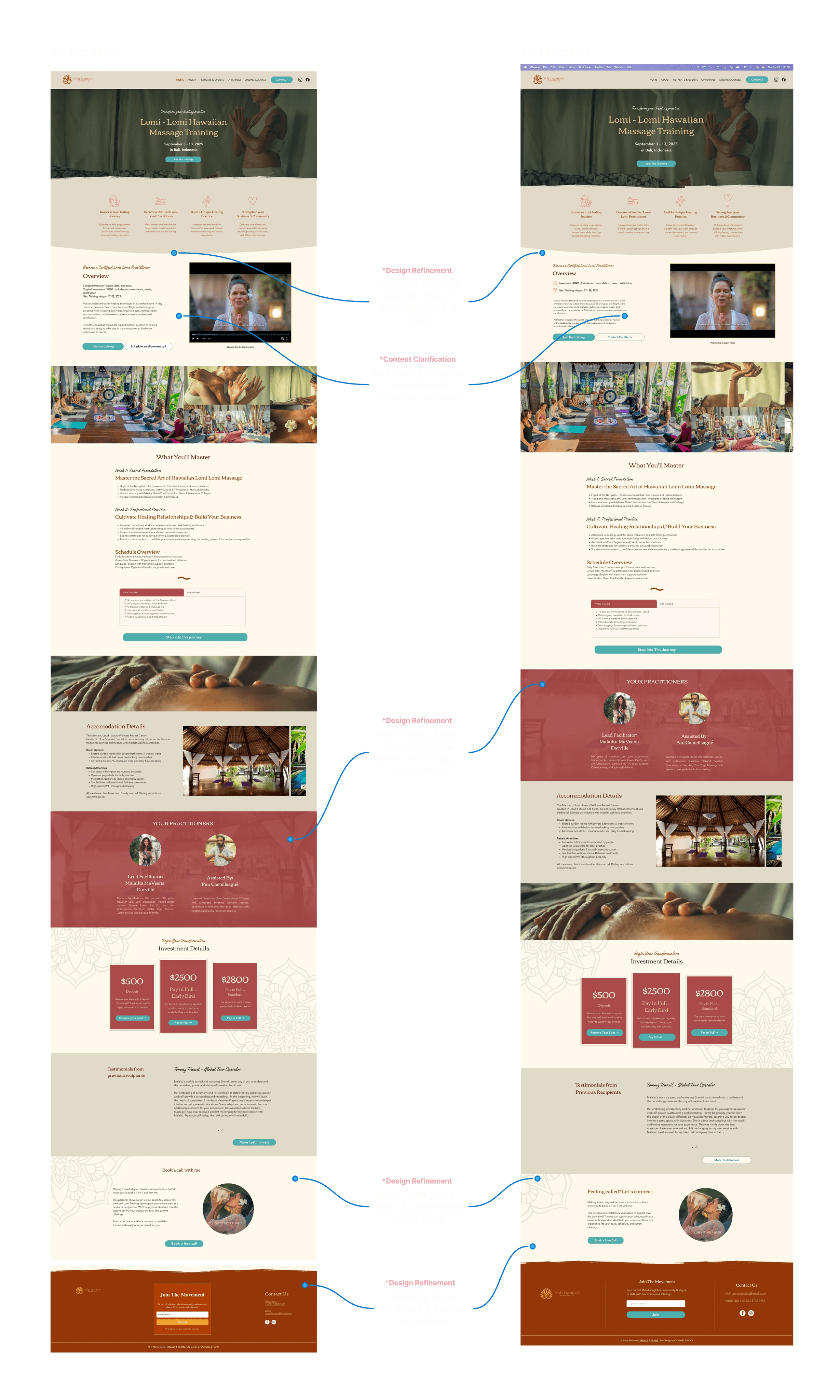
Iteration Priorities:

Social Validation Enhancement

Add facilitator impact metrics and contextual labeling to testimonials, identifying speakers as past participants for stronger credibility.

Content Clarification

Refine UX writing and add subtext throughout to reduce user confusion about retreat offerings and next steps.

Design System Refinement

Implement UI tweaks to create clearer visual distinctions between different retreat offerings and content sections.
iterations:
Homepage & retreat landing page
results & impact

From 1.5 to 4.5: The Quantifiable Impact of User-Centered Design on Booking Confidence

Why Qualitative Over Quantitative: With 6 participants in a 3-week sprint, qualitative feedback provided deeper insights into user attitudes and behavioral intentionsβ€”more valuable than statistically insignificant numbers. This approach prioritized understanding why users would adopt Auri over measuring adoption rates we couldn't meaningfully validate.

Why Qualitative Over Quantitative: With 6 participants in a 3-week sprint, qualitative feedback provided deeper insights into user attitudes and behavioral intentionsβ€”more valuable than statistically insignificant numbers. This approach prioritized understanding why users would adopt Auri over measuring adoption rates we couldn't meaningfully validate.

Why Qualitative Over Quantitative: With 6 participants in a 3-week sprint, qualitative feedback provided deeper insights into user attitudes and behavioral intentionsβ€”more valuable than statistically insignificant numbers. This approach prioritized understanding why users would adopt Auri over measuring adoption rates we couldn't meaningfully validate.

Trust

4.5/5

Users noted that the website felt credible & professional, with a 200% increase in trust ratings (from 1.5/5 to 4.5/5 across 7 participants)

Trust

4.5/5

Users noted that the website felt credible & professional, with a 200% increase in trust ratings (from 1.5/5 to 4.5/5 across 7 participants)

Inspiration

4.3/5 Rating

Users all felt inspired to take action (contact the facilitator or book) after viewing website

Inspiration

4.3/5 Rating

Users all felt inspired to take action (contact the facilitator or book) after viewing website

Usability

100% task completion rate

All users successfully understood offerings and located action points

Usability

100% task completion rate

Said they could see themselves incorporating the app into their wellness routine or travel planning lifestyle.


This website feels carefully and intentionally craftedβ€”like the facilitator really invested in showing us her heart and helping us experience what it could be like beforehand.

This website feels carefully and intentionally craftedβ€”like the facilitator really invested in showing us her heart and helping us experience what it could be like beforehand.

πŸ’¬ Gerald, User Testing Participant

Real Quote from the Usability Testing
Intuitiveness:

95%

They were able to interpret what one had to do in each page without explaination


Intuitiveness:

95%

They were able to interpret what one had to do in each page without explaination


Usability:

100%

All were able to perform each task in a moderated setting


Usability:

100%

All were able to perform each task in a moderated setting


Emotional Satisfaction

8/10 Women

Said they could see themselves incorporating the app into their wellness routine or travel planning lifestyle.


Emotional Satisfaction

8/10 Women

Said they could see themselves incorporating the app into their wellness routine or travel planning lifestyle.


Final screens
Reflections

What I Learned

Client Aesthetic vs. User Experience: The client wanted extensive color usage throughout the site. I balanced this by establishing a hierarchy that used color strategically while maintaining accessibility standards and visual clarity.

Next Steps

Crunched on time, the mobile version was built off the main design of the desktop version. I would want to test the mobile version with the same participants, but focus on usability.

You've made it to the bottom!

While you're here, let's connect.

made with lots of love and matcha

Β© 2025 – Designed by Nirel Manalili

You've made it to the bottom!

While you're here, let's connect.

made with lots of love and matcha

Β© 2025 – Designed by Nirel Manalili

You've made it to the bottom!

While you're here, let's connect.

made with lots of love and matcha

Β© 2025 – Designed by Nirel Manalili