Lune App
Turning passive hormonal tracking into actionable data. Cycle-based nutrition that tells women what to eat, and why, based on their body's rhythm.
B2C • Mobile App
Role
Role
End-to-End UX/UI Design
End-to-End UX/UI Design
Duration
Duration
Fall 2024 (4 months)
Fall 2024 (4 months)
Tools
Tools
Figma, FigJam, Otter.ai
Figma, FigJam, Otter.ai
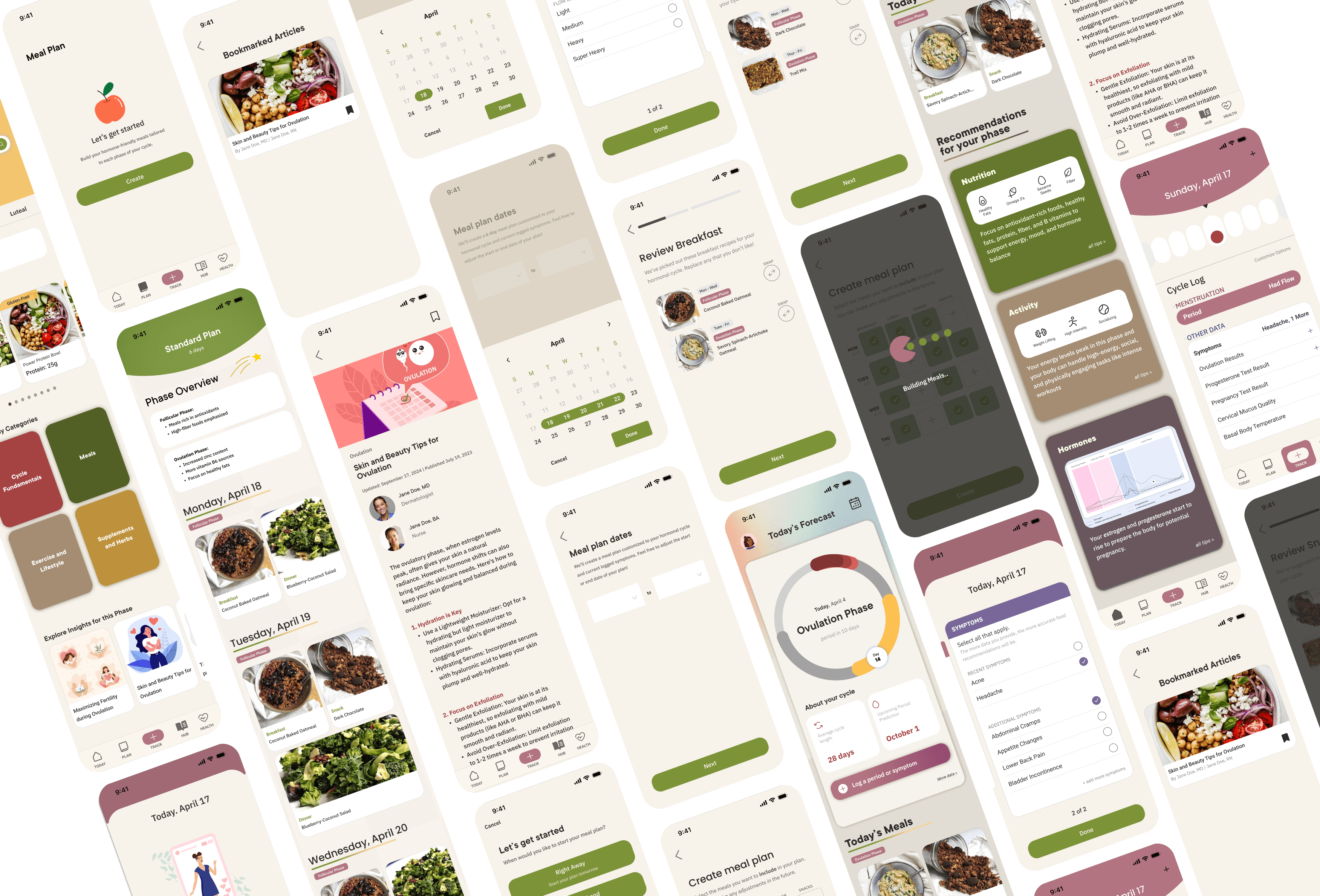
At a glance
How might we help women turn cycle data into daily action, without adding to their mental load?
How might we help women turn cycle data into daily action, without adding to their mental load?
Most cycle tracking apps stop at data collection. Women log symptoms with nowhere to take that information, and eventually stop logging altogether. I had a hunch this was why: women weren't tracking consistently because they didn't know what to do with their raw hormonal data.
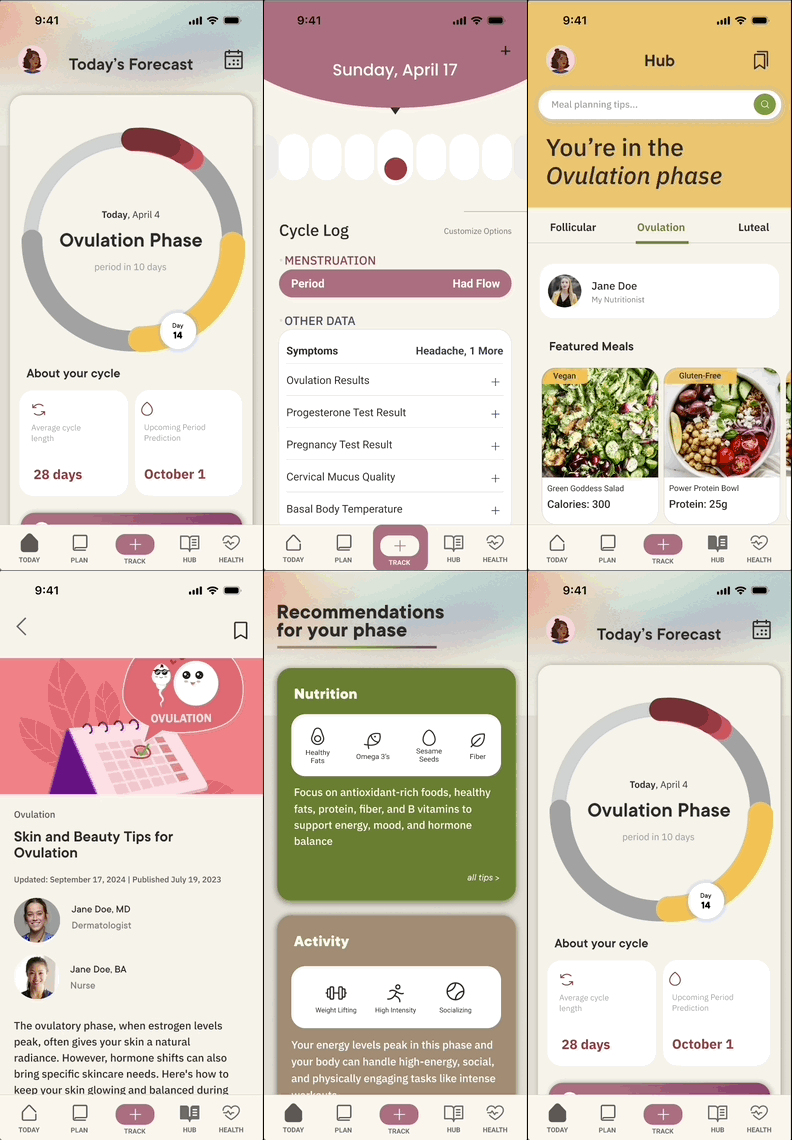
Lune turns that data into daily, actionable guidance through personalized meal planning tied to where a woman is in her cycle.
Most cycle tracking apps stop at data collection. Women log symptoms with nowhere to take that information, and eventually stop logging altogether. I had a hunch this was why: women weren't tracking consistently because they didn't know what to do with their raw hormonal data.
Lune turns that data into daily, actionable guidance through personalized meal planning tied to where a woman is in her cycle.
💡 solution preview
Track your period.
Learn about your body.
Get cycle-synced meal plans.
Track your period.
Learn about your body.
Get cycle-synced meal plans.

💡 solution preview
Constraints
Designing under real-world limits: time, scope, and access.
Designing under real-world limits: time, scope, and access.
Timeline & Scope: Building a brand and basic design system alongside the product was scope of its own. It left less room for 1:1 usability testing with more participants, and for major iterations to the core flow.
Research Approach: With limited third-party research available on women's pain points around this topic, I pivoted my core methodology toward direct user feedback (interviews and usability testing) as the more trustworthy foundation to design from.
Timeline & Scope: Building a brand and basic design system alongside the product was scope of its own. It left less room for 1:1 usability testing with more participants, and for major iterations to the core flow.
Research Approach: With limited third-party research available on women's pain points around this topic, I pivoted my core methodology toward direct user feedback (interviews and usability testing) as the more trustworthy foundation to design from.
User Interviews
User Interviews
Closing the gap between tracking and taking action.
Closing the gap between tracking and taking action.
I started with qualitative research, since hormonal wellness isn't one-size-fits-all: how a nurse manages her cycle looks nothing like how a college student does. My goal was to understand why women abandon cycle tracking, and since hormonal health ties into overall wellness, how tracking fit into their broader relationship with their bodies.
Six interviews, spanning students, nurses, and full-time moms, surfaced the behavioral patterns behind why tracking wasn't sticking.
What I heard:
Every participant tracked their cycle at some point, but couldn't say what to do with them
Most turned to Google or social media to fill the gap
Every participant linked food to how they felt through their cycle; 84% wanted personalized nutrition guidance
I started with qualitative research, since hormonal wellness isn't one-size-fits-all: how a nurse manages her cycle looks nothing like how a college student does.
Six user interviews, spanning students, nurses, and full-time moms, surfaced the behavioral patterns behind why tracking wasn't sticking.
I started with qualitative research, since hormonal wellness isn't one-size-fits-all: how a nurse manages her cycle looks nothing like how a college student does.
Six user interviews, spanning students, nurses, and full-time moms, surfaced the behavioral patterns behind why tracking wasn't sticking.
Since quitting birth control, I've been tracking my period and symptoms, but I don't really know what to do with that information.
Since quitting birth control, I've been tracking my period and symptoms, but I don't really know what to do with that information.
Since quitting birth control, I've been tracking my period and symptoms, but I don't really know what to do with that information.
— Quote from interview participant, which correlated with my assumption around inconsistent tracking
— Quote from interview participant, which correlated with my assumption around inconsistent tracking
Wellness to me as a woman is multi-dimensional, I eat, exercise, and do tasks depending on how I'm feeling each day."
Wellness to me as a woman is multi-dimensional, I eat, exercise, and do tasks depending on how I'm feeling each day."
Wellness to me as a woman is multi-dimensional, I eat, exercise, and do tasks depending on how I'm feeling each day."
— Insightful quote from an interview participant, where most women linked their hormonal wellness with food
— Insightful quote from an interview participant, where most women linked their hormonal wellness with food
Competitive Analysis
Competitive Analysis
No FemTech app treats nutrition as a tool for
preventative wellness
No FemTech app treats nutrition as a tool for
preventative wellness
After reviewing four leading cycle tracking apps to see how they support women beyond data collection, Each had a clear strength and the same gap. No FemTech apps meaningfully integrate nutrition guidance despite clear user demand, representing a significant market opportunity.
I started with qualitative research, since hormonal wellness isn't one-size-fits-all: how a nurse manages her cycle looks nothing like how a college student does.
Six user interviews, spanning students, nurses, and full-time moms, surfaced the behavioral patterns behind why tracking wasn't sticking.
I started with qualitative research, since hormonal wellness isn't one-size-fits-all: how a nurse manages her cycle looks nothing like how a college student does.
Six user interviews, spanning students, nurses, and full-time moms, surfaced the behavioral patterns behind why tracking wasn't sticking.
Syncs with third-party health data and tracks a wide range of symptoms
No nutrition guidance; stays reactive, not preventative
Syncs with third-party health data and tracks a wide range of symptoms
No nutrition guidance; stays reactive, not preventative

Clean, trustworthy overview of cycle data.
No correlation drawn between symptoms and diet.
Clean, trustworthy overview of cycle data.
No correlation drawn between symptoms and diet.

Most clinically accurate, FDA-cleared for birth control.
Built for fertility prediction, not day-to-day wellness support.
Most clinically accurate, FDA-cleared for birth control.
Built for fertility prediction, not day-to-day wellness support.

Community insight into shared symptoms
Cluttered, no actionable guidance
Community insight into shared symptoms
Cluttered, no actionable guidance
Insights
Insights
Interviews and market research pointed to the same gap: women have the data, but nothing turns it into action, and no app in the category has closed that gap through nutrition, despite clear demand for it.
Interviews and market research pointed to the same gap: women have the data, but nothing turns it into action, and no app in the category has closed that gap through nutrition, despite clear demand for it.
How might we make nutrition as the bridge between tracking and action, without adding to women's mental load?
How might we make nutrition as the bridge between tracking and action, without adding to women's mental load?
That refined question shaped two design principles:
That refined question shaped two design principles:
That refined question shaped two design principles
Actionable over comprehensive
Designing the data must include digestible context and action
Designing the data must include digestible context and action
Must fit real routines, not idealized ones
Designed around how women actually live, not an assumed ideal user
Designed around how women actually live, not an assumed ideal user
Persona
Persona
Designing for the woman who wants to explore
versus the one who just wants immediate answers
Designing for the woman who wants to explore
versus the one who just wants immediate answers
"Fits real routines, not idealized ones" meant designing for more than one kind of routine. I created two personas at opposite ends of how women engage with their wellness: one who wants to learn and go deep, one who wants speed and nothing else.
If the product only worked for one, it would fail the principle it was built on.
I started with qualitative research, since hormonal wellness isn't one-size-fits-all: how a nurse manages her cycle looks nothing like how a college student does.
Six user interviews, spanning students, nurses, and full-time moms, surfaced the behavioral patterns behind why tracking wasn't sticking.
I started with qualitative research, since hormonal wellness isn't one-size-fits-all: how a nurse manages her cycle looks nothing like how a college student does.
Six user interviews, spanning students, nurses, and full-time moms, surfaced the behavioral patterns behind why tracking wasn't sticking.

A guided way to explore how nutrition and lifestyle connect to her hormone data
Bounces between Google, YouTube, and TikTok with no clear starting point
Emma, 24
Grad student, newly off birth control, learning her body from scratch.

Quick, personalized tips she can act on immediately
No time to research; needs the tool to do the thinking for her
Lily, 38
Full-time accountant and mom of two, already meal-preps and plans ahead.
Quick, personalized tips she can act on immediately
No time to research; needs the tool to do the thinking for her
Lily, 38
Full-time accountant and mom of two, already meal-preps and plans ahead.
Low Fidelity Storyboarding
Storyboarding Emma’s journey on the app, who has deeper needs than Lily. Emma's needs will require the app to have broader discovery features.
Storyboarding Emma’s journey on the app, who has deeper needs than Lily. Emma's needs will require the app to have broader discovery features.

Design Decisions
Creating a balanced MVP based on user desirability and businesses feasibility on time
Creating a balanced MVP based on user desirability and businesses feasibility on time
Health guidance is layered, and I had far more feature ideas than time to build them. To keep scope realistic, I prioritized what balanced user desirability against engineering feasibility, and mapped every feature back to a persona need instead of building for completeness.
I started with qualitative research, since hormonal wellness isn't one-size-fits-all: how a nurse manages her cycle looks nothing like how a college student does.
Six user interviews, spanning students, nurses, and full-time moms, surfaced the behavioral patterns behind why tracking wasn't sticking.
I started with qualitative research, since hormonal wellness isn't one-size-fits-all: how a nurse manages her cycle looks nothing like how a college student does.
Six user interviews, spanning students, nurses, and full-time moms, surfaced the behavioral patterns behind why tracking wasn't sticking.

Information Architecture
Blueprinting user navigation
Blueprinting user navigation
A card sort with 4 participants revealed how women mentally group cycle-related information, and shaped a sitemap simple enough to navigate without conscious thought, so attention stays on the content, not the structure.
I scoped out a telehealth feature (visible here as a planned branch) after weighing it against timeline; it wasn't essential to proving the core hypothesis.
I started with qualitative research, since hormonal wellness isn't one-size-fits-all: how a nurse manages her cycle looks nothing like how a college student does.
Six user interviews, spanning students, nurses, and full-time moms, surfaced the behavioral patterns behind why tracking wasn't sticking.
I started with qualitative research, since hormonal wellness isn't one-size-fits-all: how a nurse manages her cycle looks nothing like how a college student does.
Six user interviews, spanning students, nurses, and full-time moms, surfaced the behavioral patterns behind why tracking wasn't sticking.

Low to Mid-fi wireframes
After determining the core flows for the designs I wanted to test, I sketched out the initial designs referencing existing app layouts to keep the design familiar and intuitive.
After determining the core flows for the designs I wanted to test, I sketched out the initial designs referencing existing app layouts to keep the design familiar and intuitive.
Flow 1: Daily Insight to Deeper Learning

Flow 2: Log & Track Period

Flow 3: Meal Planner

Branding
Combining both women’s health and nutrition,
the branding aims to mix both harmoniously.
Combining both women’s health and nutrition,
the branding aims to mix both harmoniously.
The branding draws inspiration from the moon's cyclical nature, symbolizing the dynamic phases of a woman's hormonal cycle, mixed with femininity and fresh greens.
I started with qualitative research, since hormonal wellness isn't one-size-fits-all: how a nurse manages her cycle looks nothing like how a college student does.
Six user interviews, spanning students, nurses, and full-time moms, surfaced the behavioral patterns behind why tracking wasn't sticking.
I started with qualitative research, since hormonal wellness isn't one-size-fits-all: how a nurse manages her cycle looks nothing like how a college student does.
Six user interviews, spanning students, nurses, and full-time moms, surfaced the behavioral patterns behind why tracking wasn't sticking.

Usability Testing
Removing "overwhelm" between the personal hormonal phase that's synced with the learning hub
Removing "overwhelm" between the personal hormonal phase that's synced with the learning hub
Six participants, ranging from new to experienced hormone trackers, completed all three core flows. Navigation felt intuitive to 83%, but newer users struggled specifically with the Hub's information architecture, the same "overwhelm" pattern from initial research resurfacing in a new form.
I started with qualitative research, since hormonal wellness isn't one-size-fits-all: how a nurse manages her cycle looks nothing like how a college student does.
Six user interviews, spanning students, nurses, and full-time moms, surfaced the behavioral patterns behind why tracking wasn't sticking.
I started with qualitative research, since hormonal wellness isn't one-size-fits-all: how a nurse manages her cycle looks nothing like how a college student does.
Six user interviews, spanning students, nurses, and full-time moms, surfaced the behavioral patterns behind why tracking wasn't sticking.
Highlighted UI iteration
Using the feedback about confusion in content in the hub, the content is now revised to be hormonal phase specific, with nutrition content being a component.
I started with qualitative research, since hormonal wellness isn't one-size-fits-all: how a nurse manages her cycle looks nothing like how a college student does.
Six user interviews, spanning students, nurses, and full-time moms, surfaced the behavioral patterns behind why tracking wasn't sticking.
I started with qualitative research, since hormonal wellness isn't one-size-fits-all: how a nurse manages her cycle looks nothing like how a college student does.
Six user interviews, spanning students, nurses, and full-time moms, surfaced the behavioral patterns behind why tracking wasn't sticking.

Results after incorporating user feedback
Results after incorporating user feedback
Usability rose from 83% to 100% task completion, driven largely by the Hub reorganization, with smaller fixes to logging and quick-access shortcuts contributing as well. 8 of 10 participants said they'd fold the app into their wellness routine.
I started with qualitative research, since hormonal wellness isn't one-size-fits-all: how a nurse manages her cycle looks nothing like how a college student does.
Six user interviews, spanning students, nurses, and full-time moms, surfaced the behavioral patterns behind why tracking wasn't sticking.
I started with qualitative research, since hormonal wellness isn't one-size-fits-all: how a nurse manages her cycle looks nothing like how a college student does.
Six user interviews, spanning students, nurses, and full-time moms, surfaced the behavioral patterns behind why tracking wasn't sticking.
Intuitiveness:
95%
They were able to interpret what one had to do in each page without explaination
Usability:
100%
All were able to perform each task in a moderated setting
“I feel like I’m actually taking care of myself when I use this app
💬 Ashley, Participant
Real Quote from the Usability testing
Intuitiveness:
95%
They were able to interpret what one had to do in each page without explaination
Intuitiveness:
95%
They were able to interpret what one had to do in each page without explaination
Usability:
100%
All were able to perform each task in a moderated setting
Usability:
100%
All were able to perform each task in a moderated setting
“I feel like I’m actually taking care of myself when I use this app
“I feel like I’m actually taking care of myself when I use this app
💬 Ashley, Participant
Real Quote from the Usability testing
Final Design
Final Prototype
Final Prototype
Explore the Hub.
Explore the Hub.
Cycle data alone wasn't enough. Every article and recipe here is filtered to your current phase, so you get one relevant answer instead of a feed to sort through yourself.

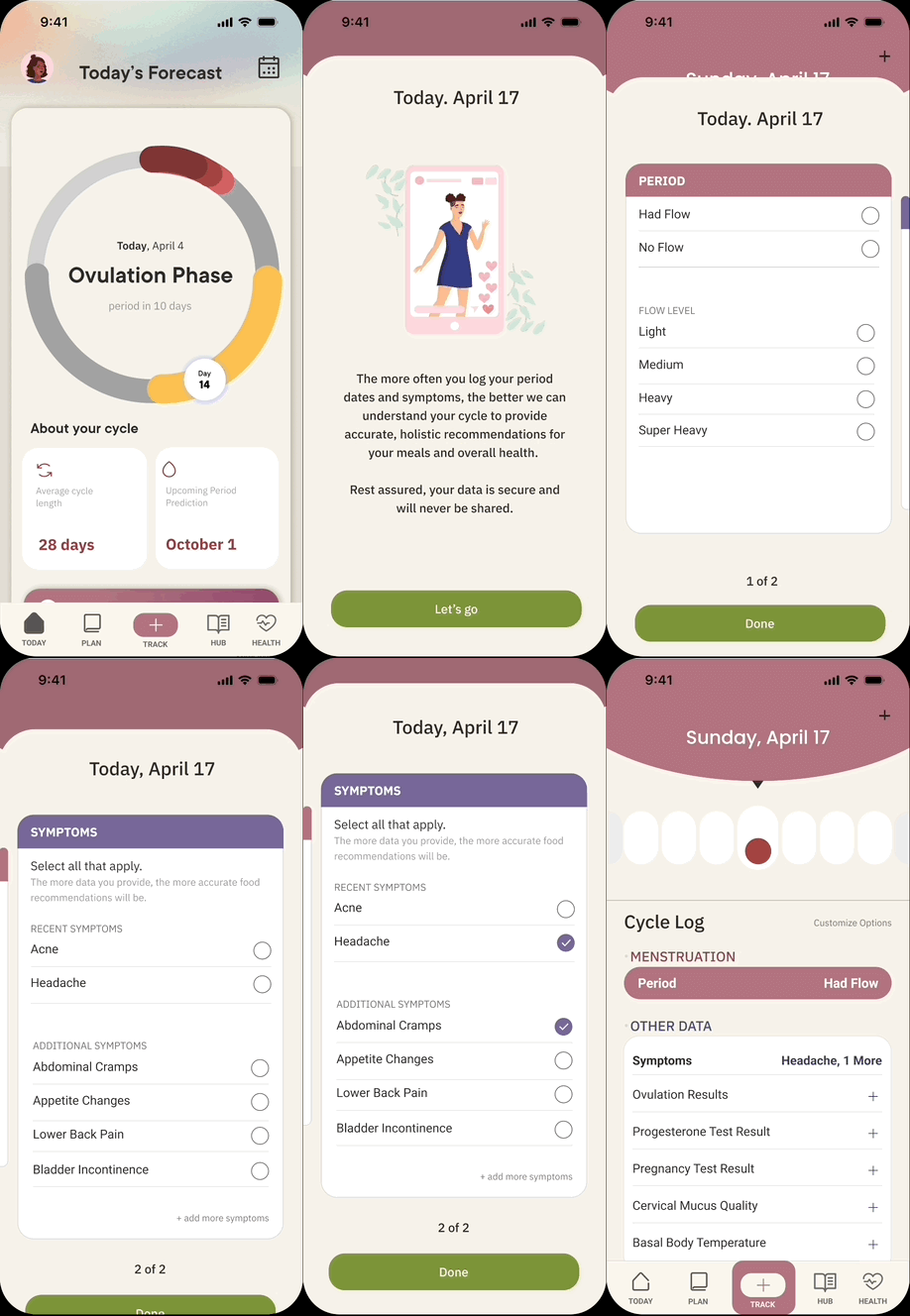
Log your period.
Log your period.
Tracking never told women what to do with the data they collected. Every symptom you log sharpens the app's read on your cycle, turning passive tracking into the input for real guidance.
Create your meal plan.
Create your meal plan.
Every participant in research linked food to how they felt through their cycle, but no app acted on it. Your meal plan updates automatically as your cycle shifts, so nutrition support arrives before you have to ask for it.
Reflections
Challenging my own bias, as a woman who meets the participant criteria
Challenging my own bias, as a woman who meets the participant criteria
I was a relatable participant in this pain point myself, and that closeness sharpened rather than clouded my process: it pushed me to actually listen when research complicated my assumptions instead of confirming them. That listening reframed how I think about user behavior more broadly. Data alone, without knowledgeable action attached to it, stays vague no matter how much of it you collect.
I started with qualitative research, since hormonal wellness isn't one-size-fits-all: how a nurse manages her cycle looks nothing like how a college student does.
Six user interviews, spanning students, nurses, and full-time moms, surfaced the behavioral patterns behind why tracking wasn't sticking.
I started with qualitative research, since hormonal wellness isn't one-size-fits-all: how a nurse manages her cycle looks nothing like how a college student does.
Six user interviews, spanning students, nurses, and full-time moms, surfaced the behavioral patterns behind why tracking wasn't sticking.
If I travelled back in time before I started this project.
If I travelled back in time before I started this project.
If I did this again, I'd test rough concepts earlier and more often — whether it's with a fellow female designer or with past participants who can quickly give feedback. I had spent too much time polishing the final UI flows before validating them.
I started with qualitative research, since hormonal wellness isn't one-size-fits-all: how a nurse manages her cycle looks nothing like how a college student does.
Six user interviews, spanning students, nurses, and full-time moms, surfaced the behavioral patterns behind why tracking wasn't sticking.
I started with qualitative research, since hormonal wellness isn't one-size-fits-all: how a nurse manages her cycle looks nothing like how a college student does.
Six user interviews, spanning students, nurses, and full-time moms, surfaced the behavioral patterns behind why tracking wasn't sticking.

